

How to Track Competitor Ads Automatically: Meta, Google, and TikTok
Performance agencies that track competitor ads automatically spot new creative angles, scaling signals, and killed campaigns weeks before manual reviews catch them. Here is the full workflow - from Meta Ad Library to hypothesis generation.

How to Track Competitor Ads Automatically: Meta, Google, and TikTok
Performance agencies can track competitor ads automatically by combining three free official sources - Meta Ad Library, Google Ads Transparency Center, and TikTok Creative Center - into a single weekly intelligence workflow. The goal is not to copy competitors, but to extract signals that feed your own hypothesis backlog before the client asks why the market moved.
This guide covers which signals matter, how to read them per platform, and how competitor intelligence connects to campaign hypothesis generation.
Key takeaways
An agency tracking 5 to 10 competitors per client across Meta, Google, and TikTok faces 150 to 300 pages weekly
Making manual checking operationally unsustainable beyond 3-4 clients before collection time crowds out analysis time. The scale problem is structural - it cannot be solved by allocating more time to manual monitoring.
A senior strategist spending 30 minutes per client per week on manual monitoring burns 5 to 12 hours weekly at a 10-client book
This time is allocated to collection, not to analysis. Replacing collection with automation recaptures the analyst hours for the work that actually generates client value.
The three primary free official competitor ad intelligence sources are Meta Ad Library, Google Ads Transparency Center, and TikTok Creative Center
Combining all three into a single weekly workflow is what converts individual signals into a coherent market view. Using only one or two produces an incomplete picture of a competitor's cross-platform strategy.
Competitor intelligence is most valuable for feeding a hypothesis backlog not for copying creative
A competitor scaling a new ad format this week is a hypothesis to test next sprint, not an instruction to replicate. The intelligence value is in identifying the pattern; the execution value is in testing whether the pattern applies to your account.
Automation eliminates the collection step but not the judgment step
The goal is to remove the 150-page weekly review so strategists can spend time on the 5-10 signals that actually warrant a hypothesis. The 140 pages that show nothing new should never require human attention.
Why manual monitoring fails agencies at scale
When you manage 10-30 client accounts, manually checking competitor ad libraries is the first process that breaks. A single agency account might track 5-10 competitors per client, across 3 platforms - that is 150-300 pages to check, most of which show nothing new on a given week.
The operational cost is real: a senior strategist spending 30 minutes per client per week on manual competitor checks burns roughly 5-12 hours every week on observation alone, before any analysis or action. That is time not spent on hypothesis testing, budget pacing, or client communication.
Competitor intelligence: the systematic monitoring of what other advertisers in your client's market are running - including which creatives are scaling, which are being killed, and what messaging angles are being tested.
Automation does not replace judgment. It eliminates the collection step so your team applies judgment to a curated signal set instead of a raw scroll.
For agencies already running structured reporting, this pairs directly with the ad budget pacing process - you review competitor signals on the same weekly cadence as pacing checks.
1. Meta Ad Library: the highest-signal free source
The Meta Ads Library is the richest free competitor intelligence source available today. It shows every active ad from any advertiser on Facebook, Instagram, Messenger, and the Audience Network - with impression volume ranges, run dates, and creative previews.
What to look for:
- Run duration as a scaling signal. An ad running 30+ days with no changes is almost always a winner. If a competitor has 3 ads that launched in the same week and only one is still live after 4 weeks, the survivor is generating results worth understanding.
- Creative volume spike. A competitor suddenly launching 8-12 new creatives in a short window signals they found a hook that works and are testing variations. Note the visual format, headline structure, and offer framing.
- Killed creative clusters. When a competitor's ad library shows a gap - a 2-week window with no new ads followed by a reset - they likely killed a campaign that was not performing and are restarting with new creative.
- Messaging pivot. Watch the headline pattern across their active ads. A shift from benefit-led copy ("Reduce your CAC by 30%") to urgency copy ("Limited seats this quarter") signals a change in positioning strategy.
Automation approach: Rather than visiting each page manually, use the Meta Ad Library API to pull active ads for specific advertisers by page ID on a scheduled basis. The API is free and returns structured JSON including ad creation date, run status, and creative text. Monitoring tools like Panoramata and Visualping wrap this API with alerting - a legitimate shortcut for agencies without engineering resources.
For understanding how your own Meta creative performance compares to what you observe in competitor libraries, the Meta Ads marketing analytics breakdown covers the lifecycle signals (scaling, mature, fatiguing, dead) that map directly to competitor observation patterns.
2. Google Ads Transparency Center: search and display signals
The Google Ads Transparency Center covers Search, YouTube, and Display Network ads from verified advertisers. It does not show impression volume or spend data, but the creative and keyword signals are extractable.
What to watch:
- Search ad copy evolution. Competitors testing 4-5 variants of the same search ad headline signal active keyword strategy work. Look for shifts in value proposition positioning, price anchoring, or feature emphasis.
- YouTube ad format. Whether a competitor is running 6-second bumpers vs. 15-second skippables tells you something about their funnel stage and budget confidence.
- Display creative refresh rate. Like Meta, a competitor refreshing display creatives more frequently than usual indicates they are scaling a campaign.
Limitation: Google Transparency Center shows you the creative but not the bid strategy, targeting, or performance. Pair it with SEMrush or SpyFu auction insights data when you need keyword-level overlap.
Make the call with the whole picture
Briefs are daily; the understanding compounds.
14 days free · no credit card
3. TikTok Creative Center: video performance benchmarks
TikTok's Creative Center publishes top-performing ads by industry, objective, region, and time period. Unlike Meta and Google, TikTok explicitly surfaces engagement data - you can filter for ads with the highest CTR, VTR (video-through-rate), or conversion volume within a category.
The key signals for agencies:
- Hook seconds. The most-clicked TikTok ads almost always front-load the value proposition in the first 2-3 seconds. If a competitor's top ad uses a problem-first hook ("Still paying too much for your CRM?"), that is a testable creative hypothesis.
- Format pattern. Are competitors winning with UGC-style footage, product demos, or talking-head testimonials? Format preference in a category shifts over time - TikTok Creative Center timestamps these trends.
- Comment sentiment. Visible on the Creative Center previews - check what questions and objections the audience raises. These are direct inputs for your client's next creative brief.
TikTok Creative Center strength over other platforms: it shows benchmarks, not just creatives. You can see that top-performing ads in the SaaS category achieve an average CTR of X% - giving you a concrete performance target, not just a creative reference.
4. The signals that actually matter: scaling, cooling, and killed
Not all competitor ad activity is worth tracking. The most actionable signals are lifecycle transitions - when an ad or campaign moves from one state to another.
| Signal | What it means | What to do |
|---|---|---|
| Scaling - running 3+ weeks, new variants launched | This creative concept is working. They are investing in it. | Deconstruct the hook, offer, and format. Test a different angle on the same concept. |
| Mature - running 6+ weeks with minimal change | Reliable performer but approaching saturation. | Note the message for market positioning context. Lower urgency to act on it. |
| Cooling - variants being paused, fewer active ads | Creative fatigue setting in. Their CPMs are rising. | If you were planning a similar creative, now is a better time to launch it - the audience is less saturated with that message. |
| Killed - full campaign gone within 2 weeks of launch | The concept failed. | Avoid testing the same hypothesis. Save time by eliminating this direction from your backlog. |
This lifecycle framework mirrors how Prooflytics classifies your own creative performance - Prooflytics competitor intelligence surfaces competitor lifecycle signals in the same weekly view as your own creative health, so you see both layers without switching tools.
5. Turning competitor signals into testable hypotheses
Obs ervation without action is noise. The goal of competitor intelligence is a populated hypothesis backlog - not a folder of screenshots.
For performance agencies that already run structured hypothesis testing, connecting competitor intelligence to your HADI sprint process is the missing workflow. A complete guide to HADI hypothesis testing for client campaigns covers the sprint mechanics - this section covers specifically how competitor signals feed the intake.
The signal to hypothesis conversion rule:
- Observation - state what you saw, with evidence: "Competitor X has run 5 video ads with a problem-first hook for 4+ weeks. 3 of the 5 are still active."
- Interpretation - why this might be happening: "Problem-first hooks appear to outperform benefit-first in this category right now."
- Hypothesis - the testable version: "If we replace the benefit-first headline on Client Y's Meta ad with a problem-first opener, CTR will increase by ≥15% within 14 days."
- Priority - is the signal strong enough to prioritise? A single ad running for 4 weeks is weak evidence. The same pattern across 3 competitors simultaneously is strong evidence.
Run this conversion monthly: review your competitor intelligence log, extract 3-5 testable hypotheses, and add them to the client's HADI board. This creates a pipeline from market observation to scheduled creative tests - removing the "we should probably test X" conversations that never turn into actual tests.
What the data shows about competitor creative velocity
The operational problem this creates for performance agencies: clients assume competitor creative strategy is stable between quarterly reviews. It is not - and when the market shifts messaging before you notice, your client's CPMs rise and CTR falls without an obvious cause.
Research tracking creative performance patterns across Meta accounts (as documented in Admetrics' 2025 analysis of DTC and ecommerce ad accounts) shows that creative fatigue sets in significantly faster than most teams expect - high-frequency campaigns see measurable CTR decay within 3-5 weeks of launch. The implication is that a competitor refreshing creatives on a 4-week cycle is not being aggressive; they are matching the biological half-life of ad creative on the platform.
For agencies, this benchmark translates directly into monitoring cadence: checking competitor ad libraries monthly is not enough. By the time a monthly review surfaces a new competitor creative, that creative may already be in its cooling phase - meaning the market insight it carries is already partially priced in.
A weekly 20-minute competitor signal review, structured around the three platforms above, keeps your hypothesis backlog current without creating a new full-time research role. Prooflytics competitor intelligence automates the collection step - pulling weekly snapshots of competitor ad activity, classifying them by lifecycle stage, and surfacing the changes that matter in the same briefing as your own campaign performance.
Bottom line
- Meta Ad Library, Google Ads Transparency Center, and TikTok Creative Center are free, official, and sufficient for most agency competitor tracking needs - no paid spy tools required at the monitoring stage.
- The lifecycle signals worth acting on are scaling, cooling, and killed - not just "new ads appeared".
- A weekly 20-minute review structured around 3-5 competitors per client keeps the hypothesis backlog current without a dedicated research role.
- Competitor signals generate hypotheses - they do not replace testing. Convert every observation into a structured hypothesis before adding it to your sprint board.
- Prooflytics competitor intelligence classifies competitor ad lifecycles automatically and surfaces them in the same briefing as your client's own campaign performance, so the two layers are always compared in context.
You can read independent reviews of Prooflytics on G2 and compare it to alternatives in the marketing intelligence category.
See how Prooflytics surfaces competitor intelligence for your client accounts to
Frequently asked questions
How often should I track competitor ads for client accounts?+
Weekly is the practical minimum for active campaign periods. Monthly reviews miss creative lifecycle transitions - by the time you see a competitor's new winning creative in a monthly check, it may already be in its mature or cooling phase. Set a recurring 20-minute weekly block to review signals across Meta, Google, and TikTok for your top 3 competitors per client. Quarterly deep-dives are appropriate for messaging and positioning analysis.
Is the Meta Ad Library API free to use?+
Yes. The Meta Ad Library API is free and publicly available without ad spend requirements. You need a Facebook account to generate an API token. Rate limits apply - for agency use tracking 20-50 competitors, a scheduled nightly pull stays comfortably within the limits. Some monitoring tools (Panoramata, Visualping) wrap the API with alerting for teams without engineering resources.
How do I know if a competitor ad is actually scaling or just new?+
Run duration is the primary signal. A new ad with no performance data is ambiguous - it could be a test or a launch. An ad running for 21+ days without modification is almost always a performer: advertisers who see poor results typically kill or modify within 2 weeks. On Meta, if a competitor launches 4-6 variants of the same concept simultaneously, they are in creative testing mode. When only 1-2 variants survive past week 3, those survivors are the insights worth extracting.
Can competitor ad tracking replace first-party data for campaign decisions?+
No. Competitor intelligence tells you what is working in the market, not why it works for your specific client audience. A hook that scales for a competitor with 500k followers and strong brand recall may not achieve the same CTR for a client with lower brand awareness. Use competitor signals to generate hypotheses and expand your creative backlog - but validate against your client's own data before committing budget.
Which competitors should I track per client account?+
The best baseline is 3-5 direct competitors (same product category, overlapping audience) plus 1-2 aspirational competitors (larger brands in the same space whose creative production values are worth studying). Avoid tracking too broadly - 10+ competitors per client produces more noise than signal. For agencies managing the full performance analytics stack, competitor tracking integrates most effectively when it is scoped to the same audience segments you are actively targeting.
Make the call with the whole picture
Briefs are daily; the understanding compounds.
14 days free · no credit card
Continue reading
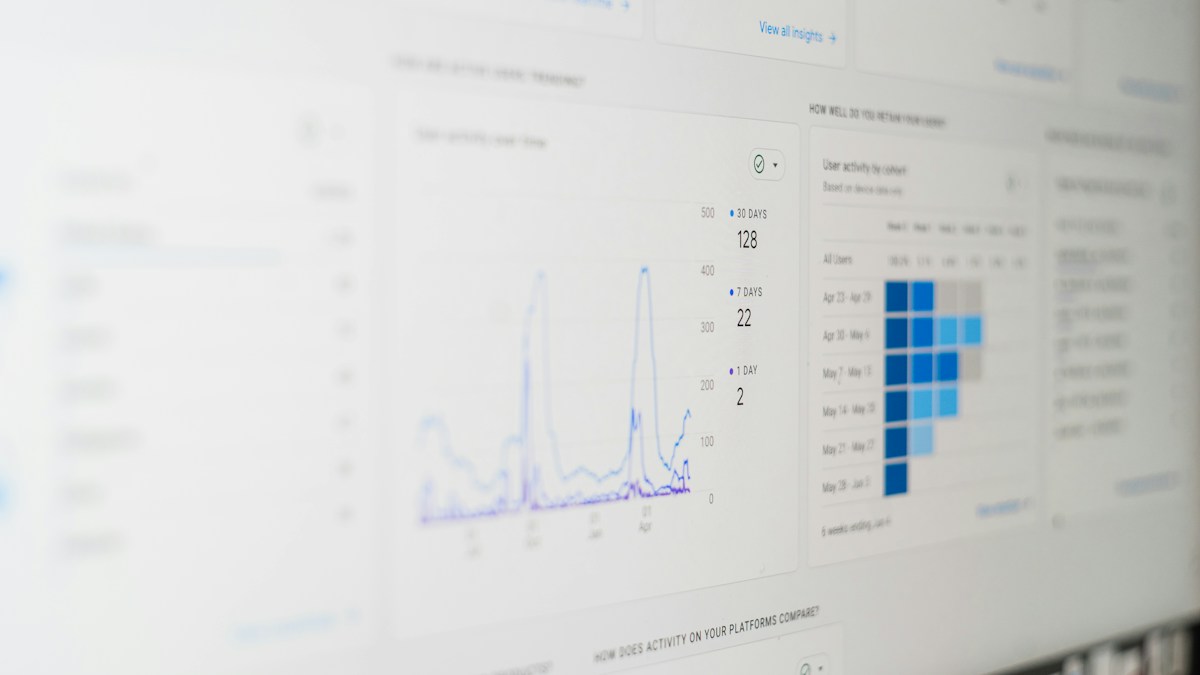
Meta Ads Marketing Analytics: Data, Creative Scoring, and Setup Guide
The Prooflytics Meta Ads integration pulls daily ad metrics, creative lifecycle scores, and attribution data into a single dashboard - and flags what to pause, scale, or duplicate before your CPL compounds.
TikTok Ads Marketing Analytics: Creative Performance, Video Metrics, and Setup Guide
The Prooflytics TikTok Ads integration monitors hook rate and CPM daily - so you catch creative fatigue in the 3-7 day window before it becomes a full budget waste problem.
Prooflytics vs TrueClicks: Marketing Intelligence vs Google Ads Quality Monitoring
TrueClicks monitors Google Ads quality scores and wasted spend for $249/month. Prooflytics monitors all paid channels daily with AI briefings, creative lifecycle scoring, and an action queue from $79/month. Here is the full comparison.

Facebook Ads Alternatives 2026: Where B2B Marketers Are Diversifying
Rising CPMs, iOS 14 signal loss, and B2B audience quality issues have B2B marketers looking beyond Meta. Here are the realistic alternatives -- and why fixing your measurement often matters more than switching channels.